
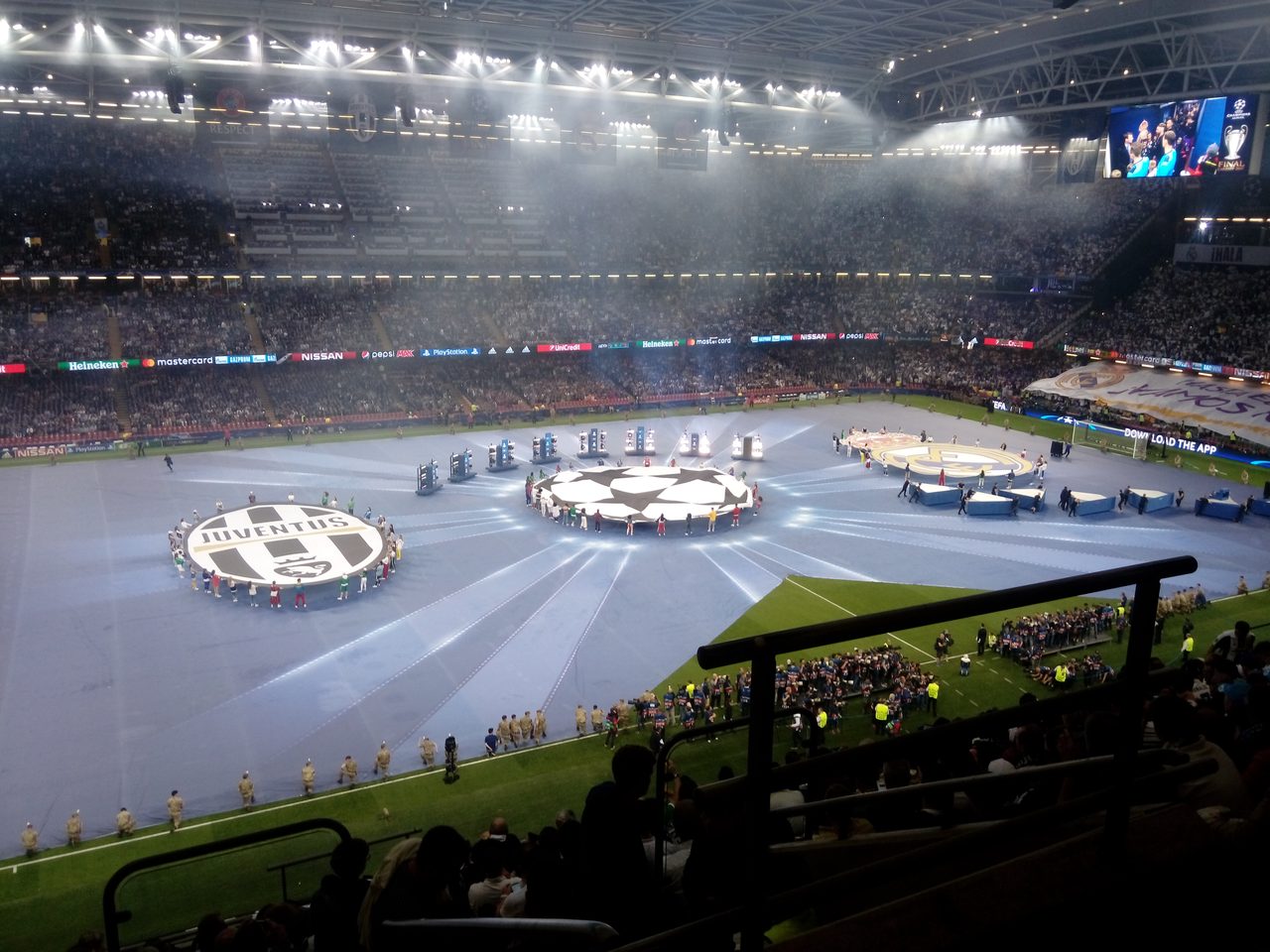
If you've turned on the TV for a Champions League night recently and thought, "Wait, where's the group I usually see?" — you're not imagining things. The group stage is gone. Dead. Retired. And honestly? Most fans haven't missed it for a single second. Let me show you what replaced it.
The old system, in three lines
Until 2024, the Champions League started with 32 teams split into 8 groups of 4. You played each of your 3 group opponents twice — once at home, once away — for a total of 6 matches. The top 2 from each group moved on to the knockout rounds; the rest went home (or dropped into the Europa League, which was a whole consolation-prize thing).
Simple, right? Also... a bit boring. By matchday 5 of 6, most groups were already decided. Giants like Real Madrid or Manchester City had their knockout spot locked up, so the last game or two became dead rubbers — matches nobody cared about, played by second-string teams, with the stands half-asleep.
The new system, step by step
Starting with the 2024–25 season, UEFA (European football's governing body) replaced the groups with a single giant league table. Here's exactly how it works:
- One table, 36 teams. Every team is in the same league table — from Real Madrid down to the smallest qualifier. Forget "Group A" and "Group H". There is only one standings list now.
- 8 matches each — against 8 different opponents. Every team plays 8 games: 4 at home, 4 away. No repeats. You might draw Bayern Munich one week and a team you've never heard of the next.
- The draw keeps it fair. Teams are sorted into 4 seeding pots of 9 based on their UEFA ranking (basically, how well their club has done in Europe over the past five years). Each team plays 2 opponents from each pot — so the big clubs can't all dodge each other. And you never face a team from your own country in this phase, so English clubs don't meet other English clubs yet.
- After 8 games, the table is cut into three slices:
- 1st–8th: straight into the round of 16. Skip the queue, no extra games.
- 9th–24th: a two-legged knockout playoff round to decide who fills the other 8 spots in the round of 16. ("Two-legged" means two matches — one at each team's stadium — and the combined score decides who goes through.) The higher-finishing teams are seeded, which gives them the slightly kinder tie.
- 25th–36th: eliminated. Done. And here's the big change: there's no parachute into the Europa League anymore. Finish 25th or worse and your European season is over.
- Then it's old-fashioned knockouts. From the round of 16 to the semifinals, every tie is two legs (home and away). The final is a single match at a neutral stadium. And there's no away-goals rule anymore (that old rule where away goals counted double as a tiebreaker was scrapped in 2021) — if the aggregate score is level, it's extra time and then penalties.
A worked example: how the cutoffs feel
Still abstract? Picture the table after all 8 rounds, using made-up numbers:
- 1st place has 21 points (7 wins, 1 loss) — cruising into the last 16.
- 8th place has 16 points (5 wins, 1 draw, 2 losses). That was the safe zone.
- 9th place has 15 points — just one point off the automatic spots. Heartbreak: they now have to survive a two-legged playoff in February instead of resting.
- 24th place has 8 points (2 wins, 2 draws, 4 losses) — the last team squeezed into the playoffs.
- 25th place has 7 points. One point below 24th, and their Champions League is over entirely. No second chance, no Europa League. That's how fine the margins are.
In real life, the 2024–25 season showed exactly this: on the final league-phase matchday in January, something like half the table still had something to play for — a top-8 spot, a playoff seed, or just survival. Compare that to the old group stage, where most final games meant nothing.
Why did UEFA do this?
Two reasons — one honest, one political.
The honest reason: more big games. Under the new system there are 144 league-phase matches instead of the old 96, and because every team plays opponents from all four pots, the giants collide much earlier. Real Madrid vs. Liverpool can happen in October now, not just in a final. More heavyweight clashes means more drama, more goals, more people watching.
The political reason: the shadow of the European Super League. Back in 2021, a group of Europe's richest clubs tried to break away and form their own closed competition, promising more blockbuster fixtures. The plan collapsed within days after fan fury — but UEFA got the message. This new format is widely seen as UEFA's answer: "You want more big games? Here they are — inside our tournament."
What changed for fans
January football. The old group stage wrapped up in December. Now the last two league-phase matchdays happen in January, so the Champions League fills that post-Christmas gap instead of disappearing for the winter.
Playoff drama. The 9th–24th playoff round (played in February) is a brand-new mini-tournament. Some genuinely huge clubs have finished in the playoffs and had to sweat through two-legged ties just to reach the round of 16 — every year since the format launched.
A small 2025–26 tweak that matters. Starting with the 2025–26 season, the top 4 league-phase finishers get a concrete reward: they host the second leg of their round-of-16 and quarter-final ties. (Hosting the second leg is a real advantage — if it goes to extra time, it's in front of your own crowd.) The top 2 keep that home-second-leg edge all the way through the semifinals too. So finishing top of the table actually means something now.
Finishing 25th in the new Champions League doesn't send you to the Europa League anymore. It sends you home. Every point counts in a way it never did under the old groups.
Who won the first edition?
Paris Saint-Germain. They won the very first Swiss-format Champions League in 2024–25 — the format's name, by the way, comes from chess, where "Swiss system" tournaments pair teams round by round using one shared table. (Nobody actually calls it the "Swiss format" on TV, but now you know.) The 2025–26 final followed on May 30, 2026, in Budapest — and as we write this in October 2026, the 2026–27 league phase is already underway, with the new top-4 seeding rewards in play for the first time.
The 60-second cheat sheet
- 36 teams, one table — no groups of 4.
- Each team plays 8 different opponents (4 home, 4 away), drawn 2 from each of 4 seeding pots.
- Top 8 → round of 16 directly.
- 9th–24th → two-legged playoff for the remaining last-16 spots.
- 25th–36th → out of Europe, full stop.
- Knockouts are two-legged until the semis; one-off final; no away goals — extra time, then penalties.
- 144 league-phase matches (up from 96), with extra games in January.
- New in 2025–26: top 4 host the second leg of R16 and quarter-finals; top 2 get it for the semis too.
Stick that to your fridge, and next time someone at the pub says "the group stage is dead," you'll be the one nodding — and explaining exactly what killed it.